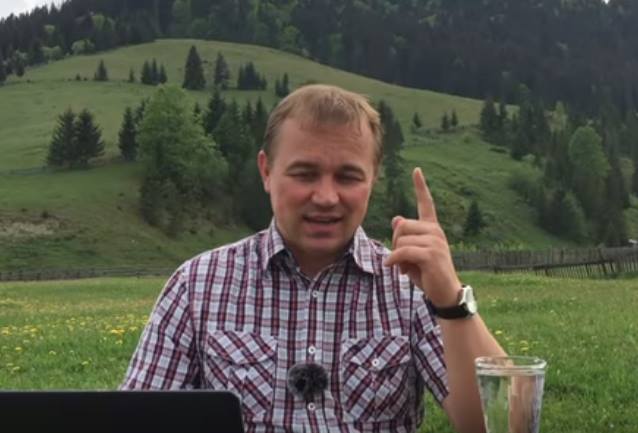
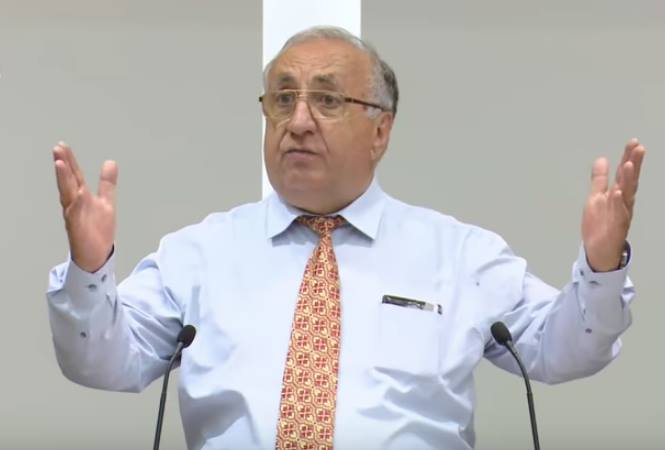
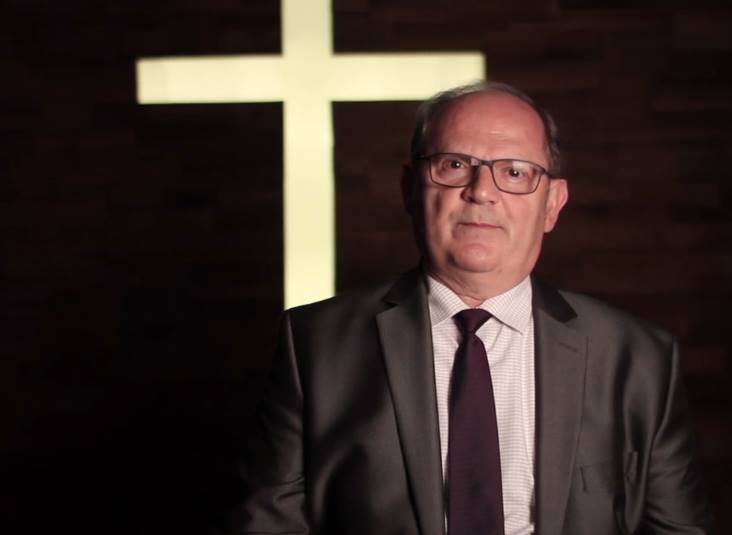
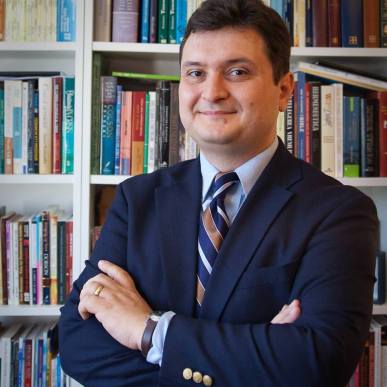
Vladimir Pustan Editorial – Caut comori pe pământ, în sufletele oamenilor……….. nu-i vreme de băut cafele turcești

PAGINA – PREDICI Vladimir Pustan

Vladimir Pustan:

Mi-am dorit în adolescență să fiu arheolog scafandru și să caut epave și orașe scufundate…
……………..
Așa am rămas să caut comori pe pământ, în sufletele oamenilor ce-mi dau bună ziua, dar și a celor ce nu-mi dau,  pentru că nu este suflet să n-ascundă o comoară. Doar trebuie căutată cu răbdare. Împreună cu alți marinari din copilărie navigăm din oraș în oraș și căutăm epave ce reparate de mâna Marelui Meșter plutesc iarăși încrezătoare pe mările lumii având de data asta o destinație clară,  portul numit Paradis. Că ne mai pierdem câteodată busola, compasul, sextantul e probabil,  dar să nu uităm că din greșeală Columb a găsit America.

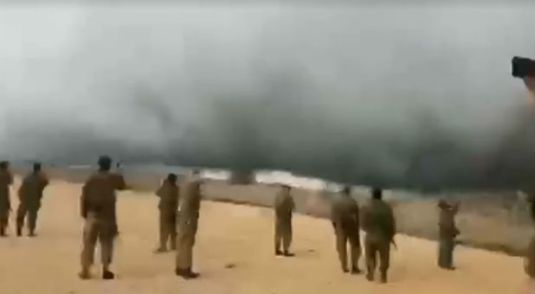
Că uneori ne simțim ca în triunghiul Bermudelor în ceață lăptoasă, se mai întâmplă. Dar asta e călătoria prieteni! Din port lucrurile se văd cu totul diferit. Va veni și vremea când vom sta pe chei cu o pălărie Panama pe cap pescuind plevușcă și bârfind.

Până atunci, toate pânzele sus și vânt la pupa, prieteni! Comorile încă sunt multe și nu-i vreme de băut cafele turcești pe lângă cherhanale.

Cititi editorialul Pastorului Vladimir Pustan aici-  http://www.ciresarii.ro/articole/editorial/Visand-marea-iarași—Vladimir-Pustan-

Cantarea: E Riul Sfant de la Rusalii

Uploaded by  on May 31, 2010

Serbările Cireşarii IV: Universitatea Biblică Bucureşti (vineri 28 mai 2010)

Vizionati mai multe predici aici la PAGINA – Predici Vladimir Pustan

Video of the Week – LOUIE GIGLIO – on PENTECOST

A Trinitarian revolution of the heart

Louie Giglio  is Lead Pastor PassionCity Church, Atlanta Georgia and Founder of Passion Conferences. Here he is speaking at the ASPIRE Conference.

Jesus is doing, on every continent, what He said, “I will build My church”. He orchestrates history, He is God and there’s no one like Him. If you signed Jesus up to help you build YOUR church, you’re in trouble. But if you are having Jesus order you around to build His church, you are on to something.

We do not have tiny power, we have the same power that God used to raise the crucified Lord from the dead. The kind of power that can change cities and crack history, that is the kind of power we have.

Ephesians 3:20

20 Now to him who is able to do immeasurably more than all we ask or imagine, according to his power that is at work within us,

I’d like to talk about a Trinitarian revolution of the heart. God is always at work and is wanting to do more (not just in the sense of the measurable increments) …but in what we can do. He is always wanting to show up in a way, to move in a way that makes it clear to everyone that these people did not do this on their own and when that happens, glory comes to God. God gets the glory in the church.

Talks about people who are afraid of the third part of the trinity- the Holy Spirit. He makes 2 points – People don’t speak or celebrate Pentecost (even though around the world people count the 50 days from Easter and praise God for the day when the Holy Spirit came and blew the church away. You remember that it is a trinitarian thing that empowers the church’s ministry. The Holy Spirit leads us to truth (John 14) And, He will testify  to Jesus. And, by the way, the Holy Spirit is a Person. He is not an “it”.  When the Holy Spirit comes, he doesn’t make much about the Holy Spirit, he’s gonna make it all about Jesus. The Holy Spirit loves to testify about Jesus. In a Spirit filled church you are talking all about Jesus. And when the city hears Jesus’ name and not your (church) name big things are going to happen.

Pentecost (3) Gifts may vary in strength

by Wayne Grudem – Paul says that if we have the gift of prophecy, we should use it “in proportion to our faith” (Rom. 12:6), indicating that the gift can be more or less strongly developed in different individuals, or in the same individual over a period of time. This is why Paul can remind Timothy, “Do not neglect the gift you have” (1 Tim. 4:14), and can say, “I remind you to rekindle the gift of God that is within you” (2 Tim. 1:6). It was possible for Timothy to allow his gift to weaken, apparently through infrequent use, and Paul reminds him to stir it up by using it and thereby strengthening it. This should not be surprising, for we realize that many gifts increase in strength and effectiveness as they are used, whether evangelism, teaching, encouraging, administration, or faith.

Texts such as these indicate that spiritual gifts may vary in strength. If we think of any gift, whether teaching or evangelism on the one hand, or prophecy or healing on the other, we should realize that within any congregation there will likely be people who are very effective in the use of that gift, perhaps through long use and experience, others who are moderately strong in that gift, and others who probably have the gift but are just beginning to use it. This variation in strength in spiritual gifts depends on a combination of divine and human influence. The divine influence in the sovereign working of the Holy Spirit as he “apportions to each one individually as he wills” (1 Cor. 12:11). The human influence comes from experience, training, wisdom, and natural ability in the use of that gift. It is usually not possible to know in what proportion the divine and human influences combine at any one time, nor is it really necessary to know, for even the abilities we think to be “natural” are from God (1 Cor. 4:7) and under his sovereign control.

But this leads to an interesting question: how strong does an ability have to be before it can be called a spiritual gift? How much teaching ability does someone need before he or she could be said to have a gift of teaching, for example? Or how effective in evangelism would someone need to be before we would recognize a gift of evangelism? Or how frequently would someone have to see prayers for healing answered before he or she could be said to have a gift of healing?

More

Today was supposed to be my wedding day…

A heartfelt journey of one young woman – read her entire story here - http://thegospelcoalition.org/blogs/tgc/2012/05/26/today-was-supposed-to-be-my-wedding-day/

Who could have guessed that simply checking a box on a church form would eventually end in heartbreak, financial loss, and unwanted singleness? Difficult and sad as it was, God was there every step of the way. He was there in the simple way it ended, despite our lives being intertwined in nearly every way. He was there in the support and love our family and friends provided. He was there to give me a sense of peace that transcended all understanding. Left to myself, previous breakups had knocked me down to my lowest points in life. But this time, with more riding on the relationship than ever before, I was truly okay. I suppose obedience to God made the difference. As much as it hurts, God is always there to pick up the pieces.

Related posts

Bumper Sticker Theology vs. Reliability of Biblical Texts – Daniel Wallace at Dallas Theological Seminary

“The Bible says it. I believe it. That settles it.” Simple, this aphorism speaks highly of the importance of faith and it links that faith to the ultimate authority for the Christian, as the Word of God. It’s pithy and it’s easy to remember. It’s found on countless church marquees, evangelistic tracts and websites. To millions of believers it speaks of a child like faith, and it just might be the worst Christian slogan ever concocted.

There are serious gaps in this triad. Take the first line: The Bible said it. How do you know that the Bible said it? Which Bible says it? In order to know all that the Bible said, in all its particulars, requires doing serious work in ancient Greek and Hebrew manuscripts trying to trace back the trail to the original wording, because the original manuscripts turned to dust long ago. It requires a profound knowledge of scribal habits and at least a passing acquaintance with several ancient translations of the Bible- Latin, Coptic, Syriac, and a host of others.

And even after all the spade work has been done, we cannot be sure of all the details. Now the irony is that God Himself has put you and me, ministers of the Gospel in the extremely awkward position of having to echo that question first posed to Eve in the garden: “Has God REALLY said?” Now, as a general rule, I don’t like to be in league with the devil, so I should point out that, though the question is the same, our motivation should be different. We ask because we really wanna know, so that we can believe. That old serpent asked because he wanted to sow the seeds of doubt, not only of the Word of God, but of also the character of God. “Did God really say this?” Well, if He did, He must not be good. But, we still must ask.

Pentecost (4) Discovering and seeking spiritual gifts

by Wayne Grudem – Paul seems to assume that believers will know what their spiritual gifts are. He simply tells those in the church at Rome to use their gifts in various ways: “if prophecy, in proportion to our faith…he who contributes, in liberality; he who gives aid, with zeal; he who does acts of mercy, with cheerfulness” (Rom. 12:6-8). Similarly, Peter simply tells his readers how to use their gifts, but does not say anything about discovering what they are: “As each has received a gift, employ it for one another, as good stewards of God’s varied grace” (1 Peter 4:10).

But what if many members in a church do not know what spiritual gift or gifts God has given to them? In such a case, the leaders of the church need to ask whether they are providing sufficient opportunities for varieties of gifts to be used. Though the lists of gifts given in the New Testament are not exhaustive, they certainly provide a good starting point for churches to ask whether at least there is opportunity for those gifts to be used. If God has placed people with certain gifts in a church, when these gifts are not encouraged or perhaps not allowed to be used , they will feel frustrated and unfulfilled in their Christian ministries, and will perhaps move to another church where their gifts can function for the benefit of the church.

Beyond the question of discovering what gifts one has is the question of seeking additional spiritual gifts. Paul commands Christians, “Earnestly desire the higher gifts” (1 Cor. 12:31), and says later, “Make love your aim, and earnestly desire the spiritual gifts, especially that you may prophesy (1 Cor. 14:1). In this context, Paul defines what he means by “higher gifts” or “greater gifts” because 1 Corinthians 14:5 he repeats the word he used in 12:31 for “higher” (Gr. Meizon) when he says, “He who prophesies is greater than he who speaks in tongues, unless someone interprets, so that the church may be edified” (1 Cor. 14:5). Here the “greater” gifts are those that most edify the church. This is consistent with Paul’s statement a few verses later when he says, “Since you are eager for manifestations of the Spirit, strive to excel in building up of the church” (1 Cor. 14:12). The higher gifts are those that build up the church more and bring more benefit to others.
But how do we seek more spiritual gifts? First we should ask God for them. Paul says directly that “he who speaks in a tongue should pray for the power to interpret” (1 Cor. 14:13; cf James 1:5, where James tells people that they should ask God for wisdom).

Next, people who seek additional spiritual gifts should have right motives. If spiritual gifts are sought only so that the person may be more prominent or have more influence or power, this certainly is wrong in God’s eyes. This was the motivation of Simon the Sorcerer in Acts 8:19, when he said, “Give me also this power, that anyone on whom I lay my hands may receive the Holy Spirit” (see Peter’s rebuke in vv. 21-22). It is a fearful thing to want spiritual gifts or prominence in the church only for our own glory, not for the glory of God and for the help of others. Therefore those who seek spiritual gifts but “have not love” are “nothing” in God’s sight (cf. 1 Cor. 13:1-3).

After that, it is appropriate to seek opportunities to try the gift, just as in the case of a person trying to discover his or her gift, as explained above. Finally, those who are seeking additional spiritual gifts should continue to use the gifts they now have, and should be content if God chooses not to give them more. The master approved of the servant whose pound had “made ten pounds more,” but condemned the one who hid his pound in a napkin and did nothing with it (Luke 19:16-17, 20-23)—certainly showing us that we have responsibility to use and attempt to increase whatever talents or abilities God has given to us as his stewards. We should balance this by remembering that spiritual gifts are apportioned to each person individually by the Holy Spirit “as he wills” (1 Cor. 12:11), and that “God arranged the organs in the body, each one of them, as he chose” (1 Cor. 12:18). In this way Paul reminds the Corinthians that ultimately the distribution of gifts is a matter of God’s sovereign will, and it is for the good of the church and for our good that none of us have all of the gifts, and that we will need to continually depend on others who have gifts differing from ours. These considerations should make us content if God chooses not to give us the other gifts that we seek.

Rusaliile si Lucrarea Duhului Sfant (3) Wayne Grudem

c

Aceasta este partea finala:

  • Duhul Sfint unifica
  • Duhul Sfint dovedeste prezenta si binecuvintarea lui Dumnezeu

Teologia Sistematica de Wayne Grudem (pp 666-681)

 
View this document on Scribd

Cititi in Limba Engleza-

NEXT Conference Orlando, Florida May 26-29, 2012

The Very Last Next

The final NEXT Conference, Hosted by Sovereign Grace Ministries is taking place  in Orlando, Florida May 26-29. You can buy session passes for the individual sessions onsite for $30.  We will be posting links to any audio/video as it becomes available.

You can listen to audio of NEXT Conference 2011 sessions here - http://www.thisisnext.org/resources/

You can see the Session Schedules here - http://www.thisisnext.org/schedule/

Featured session speakers:

  • C.J. Mahaney

“The Church and Disappointment”When Expectations Collide With Reality
C.J. Mahaney leads Sovereign Grace Ministries in their mission to establish and support local churches.

  • Matt Chandler

“The Church and Culture”Reaching Out Without Selling Out
Matt Chandler is a lead pastor of The Village Church in Flower Mound, Texas, and is the author of The Explicit Gospel.

  • Kevin DeYoung

“The Church and Friendship”How Not to be a Stupid Friend“The Church and Holiness”Why Jesus Says We Need It and Why We Don’t Want To Talk About It
Kevin DeYoung pastors University Reformed Church in East Lansing, Michigan, and is the co-author of What is the Mission of the Church?

See the list of other speakers here - http://www.thisisnext.org/speakers/

Pentecost (2) How many gifts are there?

from Wayne Grudem’s  BIBLE Doctrine – Essential Teachings of the Christian Faith.

In Part 1 We read regarding Spiritual Gifts in general- 1)Spiritual gifts in the history of redemption and 2) The purpose of gifts in the New Testament age. You can read part 1 here.

The New Testament lists specific spiritual gifts in six different passages. See table here -1 Corinthians 12:28 , 1 Corinthians 12:8-10, Ephesians 4:11, Romans 12:6-8, 1 Corinthians 7:7, 1 Peter 4:11.

Gifts of the Holy Spirit:

  1. apostle   – (1-8 from 1 Cor. 12:28)
  2. prophet
  3. teacher
  4. miracles
  5. kinds of healing
  6. helps
  7. administration
  8. tongues
  9. word of wisdom   – (9-13 from 1 Cor. 12:8-10)
  10. word of knowledge
  11. faith
  12. distinguishing between spirits
  13. interpretation of tongues
  14. evangelist        -   (14-15 from Ephesians 4:11)
  15. pastor-teacher
  16. serving    -  (16-20 from Romans 12:6-8)
  17. encouraging
  18. contributing
  19. leadership
  20. mercy
  21. marriage     – (21-22 from 1 Cor. 7:7)
  22. celibacy

1 Peter 4:11 whoever speaks (covering several gifts) and whoever renders service (also covering several gifts). Click to read more…

More

Wayne Grudem and Ian Hamilton: The state of prophecy today

A debate between Ian Hamilton (Cambridge Presbyterian Church and formerly a minister in the Church of Scotland) and Wayne Grudem (Phoeniz Seminary, Arizona, formerly at Trinity International University in Deerfield, Illinois) about the role of prophecy in the church today. Chaired by Adrian Reynolds. Recorded at the 2010 EMA. From The Proclamation Trust on Vimeo. From 2010, Phoenix, Arizona.

Ian Hamilton is currently teaching at Cambridge and Wayne Grudem did his doctoral studies there. The aim is to talk about some of the things we know we don’t agree about, but, we think that it’s mature and the time is right as Evangelical Christians who love Christ, who love His word and believe firmly in His word and hold firmly to it; to be able to talk about some of the things we disagree about in a constructive mature way; to gently challenge one another. To think about some of the implications about how these things affect church life. That’s the reason for having these two dear brothers here with us.

EMA 2010: discussion about prophecy, posted with vodpod

I managed to transcribe notes from the first 38 minutes of a 76 minute discussion; the first of its kind (videotaped and publicly posted) between two  Godly men, who are also widely respected theologians, and who both believe in the continuationist position on the gifts of the Spirit, however, Ian Hamilton believes prophecy is not one of those gifts that continued after the New testament canon was closed.

Wayne Grudem:

I have not spoken much about this gift of prophecy question or taught much about it for several years… As I came back to the discussion, I thought it might be helpful to start out with an overview of the whole Bible, Genesis to Revelation.

There is a view that I am going to call cessationsim. A cessationist position that with regard to the gift of prophecy would argue that God doesn’t communicate information directly to us today, apart from the words of the Bible or in addition to the words of the Bible and that’s the viewpoint I’m going to be disagreeing with.

I think what strikes me the most as I look from Genesis to Revelation on this question, is what seems to me the absence of any clear biblical evidence to prove the heart of the cessationist position. I don’t think there’s any passage in scripture, or any combination of passages that should lead us to think that God doesn’t communicate directly with His people throughout all of history, in individual, personal ways that occur, in addition to in and through the written words of scripture. If we look at the whole scope of biblical history, we see that from beginning to end, God had a personal relationship with his people; a relationship in which he communicated directly and personally with them. And, this communication was never limited to the words that He gave all of His people in the book of the covenant, or the writings of the canon of scriptures.  God had a personal relationship and a direct communication with people from the beginning of the Bible and throughout its history.

So, think of his personal relationship and communication with Adam & Eve,  with Cain & Abel, with Enoch, who walked with God (Genesis 5:24), with Noah, with Abraham and Isaac, and Jacob; the narratives of which are filled with discussions of God appearing to them and speaking to them, personally. With Moses, and David, with Solomon, and with many old testament prophets and kings to whom God communicated directly, individually and personally.

And then, in the New Testament, in the person of Jesus, God the Son, communicated individually  and personally with many people while he was on earth. And then the New Testament promises a personal relationship that the Father, Son and Holy Spirit will have with each individual believer. Here are some verses:

  • John 14:23 “If anyone loves me, he will keep my word, and my Father will love him and we will come to him and make our home with him”. The imagery of making the home of the Father and Son with us, that imagery implies personal fellowship.
  • Revelation 3:20 “If anyone hears My voice and opens the door, I will come into him and eat with him and he with me”. The imagery of eating with one another implies ongoing personal fellowship.
  • Paul in Philippians 3:20 “Let those of us who are mature think this way, and if in anything you think otherwise, God will reveal that to you also”. That implies personal communication from God, revealing sin in the lives of individual Philippian Christians.
  • Romans 8:14 “For all who are led by the spirit of God are sons of God”. The present indicative verb for “all who are led”, indicates that this leading is a regular or ongoing process; being led by the spirit of God.
  • Galatians 5:16,18 “But I say, walk by the spirit and you will not gratify the desires of the flesh. But, if you are led by the Spirit, you are not under the law”. Again the verb (in Greek) indicates ongoing activity- being led by the spirit of God.

My point is that from the beginning to the end, the Bible tells us of a God who relates individually and personally to His people. And now, it seems to me that some in the cessationist position are coming and telling us: Contrary to the experience of all of God’s people throughout all the books of the Bible, that God no longer communicates personally and individually with any of his people except through the written words of the canon of Scripture. So it seems to me that a cessationist position asks us to believe

  1. that throughout the Bible, God communicated to His people both through written scripture, as much as they had at any point, and through additional, direct, personal interaction with people.
  2. But then it asks us to believe that God now only communicates through the written words of the canon and no longer with direct, personal fellowship and interaction with people. This is quite strange in light of the fact that the new covenant seems to be better in every way, but how can it be better if we’ve lost that element of personal relationship with God and personal communication with God in addition to the words of the canon. That element that characterized all periods of history that the Bible talks about. Where is anything in the Bible that would lead us to believe that?

Of course, I understand that cessationists believe that the canon is closed and I agree with that. But the question is not that of the canon. The question is what about communication, from God to specific individuals that is not part of the canon? If the Bible is the book of the covenant, that stipulates the terms of the relationship between God as king and us as His covenant people. Then, are we to say that the king can never communicate with His people in any additional ways, besides the covenant document? Can he who created speech, and loves His people,  never speak to them  directly and personally? A cessationist view, if I understand it correctly, allows no element for individual, personal guidance from the Holy Spirit in the life of a Christian, ever. Our guidance is simply to be taken from reading the Bible and using mature wisdom to apply it to our lives. But surely, the vast majority of Christians, throughout history have known and experienced the guidance of the Holy Spirit in making decisions, especially while they are praying and reading the words of scripture, but in other times as well. Apart from the concentrated times of reading scripture and prayer. And, they have known that this guidance includes not only the direction and commands and principles of scripture, but also subjective impressions of God’s will and additional thoughts and specific memories the Lord brings to mind. It seems to me that a position that rules out personal guidance from the Holy Spirit today is so completely different from the whole course of Biblical history and from the New Testament teaching on personal fellowship that we have with the Father, Son and Holy Spirit.

Specifically with regard to the gift of prophecy, we have … and I think it is a sub category of that broader category of personal fellowship and communication from God to believers and so I would look at passages like 1 Thessalonians 5 19-21, and in that passage Paul says, “Do not despise prophecies, but test everything, hold fast to what is good”. And, so I think that he is implying here and in 1 Corinthians 14, when he says, “Let two or three prophets speak and let the others way what is said”, that God can bring things to mind, and when we report something that God has suddenly brought to mind, that Paul would call that the gift of prophecy functioning in the church. But it is always to be tested by Scripture. Paul says, “Do not despise prophecies, but test everything. Hold fast to what is good”. It is to be tested by scripture and by what we know about our lives and the word in general and we may be mistaken by those kinds of things, but of course , sermons can also be mistaken and advice from others can also be mistaken, but they have a useful role in the Christian life.

I think this element of prophecy, as well, is something that the New Testament talks about; views as commonly functioning, in the churches in Rome, in Corinth, Ephesus and Thessaloniki and is something that ought to be appreciated and valued today.

Click below for the rest of the notes…….

More

La Cincizecime de Costache Ioanid

E zi de sfanta Cincizecime.
E ziua ta, o, Sfinte Duh!
Coboara iar din inaltime
Cu snop de flacari in vazduh!
Trimite, Tata, iarasi norul,
revarsa sfantul Tau suvoi
si vino prin Mangaietorul!
Cobori la noi!

Te striga iar atatea glasuri,
copii cu sufletul devot.
Ni-i dor de-acele sfinte ceasuri
cand ne vorbeai de pe chivot.
Ni-i dor de ploaia revarsarii,
de semne-n cer si stalpi de fum.
O, nu lasa s-o dam uitarii!
Cobori si-acum!

Cu cat mai multi in largul zarii
Te chemam azi si te dorim
Ca-n ziua binecuvantarii,
Atuncea in Ierusalim!
Intr-o casuta ne-nsemnata
a fost pe lume-ntai sa vii.
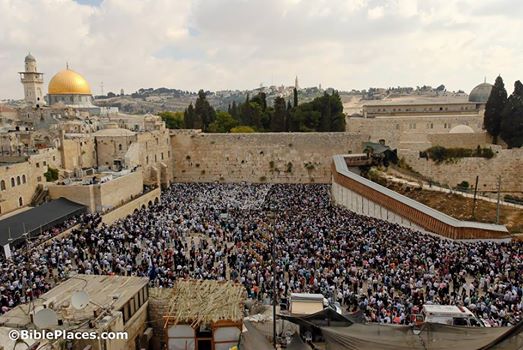
Atunci erau o mica ceata,
azi mii si mii!

Abia se savarsise-n lume,
din indurarea Celui Sfant,
cea mai puternica minune:
supremul vietii legamant.
Isus, iubind dumnezeieste,
Se daruieste umilit:
El, Mare Preot ce jertfeste,
El, Miel jertfit.

Abia pornise vestea mare
c-a inviat din morti Iisus,
iar stropii jertfei salvatoare
se mai vedeau acolo sus…
Statea o cruce-n deal pustie
si gol mormantul, cum e scris,
si drumul catre vesnicie
era deschis.

Dar nu era putere-n lume,
izvorul tainic de minuni.
De-aceea staruiau anume
apostolii in rugaciuni.
Deodata-n blanda dimineata
se-aude-un vuiet din tarii,
din bolta cerului mareata
din vijelii.

Un tunet bubuie din slava,
peretii parca se desprind.
De zguduirea lor grozava
fiori de spaima te cuprind.
Se-aud rostogoliri si frangeri.
Si-n glas de tainice rostiri,
se-arata ceru-ntreg de ingeri
si de ostiri.

Vin scaparari de foc in fuga,
lumini din slava lui Iisus.
Cu bratele intinse-n ruga,
apostolii privesc de sus.
Un val de foc ca rupt din soare
din inaltimi s-a revarsat.
Si-o flacara spre fiecare
s-a indreptat.

O, cine ar putea sa spuna
ce dragoste-i va fi cuprins
de cand purtau acea cununa
ce pe vecie s-a aprins?
Ce freamat dulce si fierbinte!
Ce ganduri ce te nalta-n zbor!
Nici psalmii nu aveau cuvinte
cu mai mult dor.

Din pieptul lor si de pe buze
pornise glasul vietii noi:
cand mangaios ca din cobuze,
cand ca o trambita-n razboi.
Din piatra inimii pustie,
in cerul marii bucurii,
tasnise raul de-apa vie
spre vesnicii.

De-atunci cu undele-i bogate
El a pornit spre vai adanci,
cand revarsat prin sesuri late,
cand stavilit prin muchi de stanci,
turnand torente de iubire,
si-acel susupin in rugaciuni,
dand tuturor descoperire
si dand minuni.

O, rau de viata, de putere,
Tu, dar trimis de blandul Miel,
Tu celor orbi le dai vedere
Ca sa putem privi spre Cer;
prin Tine surzii-aud Cuvantul
si glas voios dai celui mut.
Iar cei ologi intreg pamantul
l-au strabatut.

Tu risipesti din lume somnul
ce tine sufletul ascuns.
Prin Tine noi vorbim cu Domnul
si tot prin Tine-avem raspuns.
Tu ne dai vise si vedenii,
ne dai cantari si ne vorbesti
in limbi apuse de milenii
sau ingeresti.

Tu aperi de-a ispitei soapte,
Tu usurezi atatea cruci.
Tu faci sa cante-n miez de noapte
pe cei cu gleznele-n butuci.
In clipe dragi de adorare
inalti pe multi de la pamant
si-nveti pe credinciosi sa zboare
spre Cerul sfant.

Iar astazi Tu ne dai de veste
prin porti strajerii veghetori
ca multa vreme nu mai este
pan-la-ntalnirea cea din nori.
Ca Noe-n vremile vechimii,
Ce indemna spre Dumnezeu,
Tu chemi, din ziua Cincizecimii,
Tu chemi mereu.

Curand se va opri izvorul.
Biserica se va-nalta.
Iar Duhul Sfant, Mangaietorul,
va fi luat si el cu ea.
O, cati in lume vor ramane
Cu inimile in vapai,
Stigand: – Nu ne lasa, Stapane,
suntem ai Tai!

Ce-I drept, nu Te-am urmat niciunde,
Ca-i greu cu valu-acestei vieti1
Si Domnul, vai, le va raspunde:
-Nu va cunosc cine sunteti!

De-aceea-n ceasul cel din urma,
Noi Te rugam, ca niste prunci:
Coboara peste-a noastra turma,
O, Duh din ceruri,
ca atunci.
Cum pasarile calatoare
invata puii lor sa zboare
spre-ai duce-n stolul calator,
coboara, Duhule de viata,
si da-ne aripi si ne-nvata
ca toti, in ziua cea mareata,
sa fim in zbor!
Sa fim in zbor!

Vasile Oprea

Doamne mai vreau Rusalii

Uploaded by  on Nov 22, 2008

PAGINA – Vasile Oprea Interviu si Cantari aici

Previous Older Entries

Added March 6,2011 (at 10,700 hits)

free counters

Thanks for stopping by today!

literature
Please do not change this code for a perfect fonctionality of your counter literature
city map
Watch video at Vodpod.
Bloguri, Bloggeri si Cititori

Excellent Videos

(via The Branch Church) with BBC footage

Relaxing Instrumental Christian Music – Listen while you read or meditate on God

My Scribd books / Carti in Limba Romana

2011 Gospel Coalition Video- Audio – includes panel discussion on Rob Bell’s book ‘Love wins’ (on Universalism)

In Awe of God’s Creation – Coplesit de creatia lui Dumnezeu – VIDEOS